Focus on consistency, not perfection
Families often assume they need a big language plan, but small routines tend to work better. A few consistent Kurdish moments each day can go further than occasional intense effort.
That might mean naming food at dinner, reading one bilingual page before bed, or repeating a handful of favourite words every morning.
Use books to reduce friction
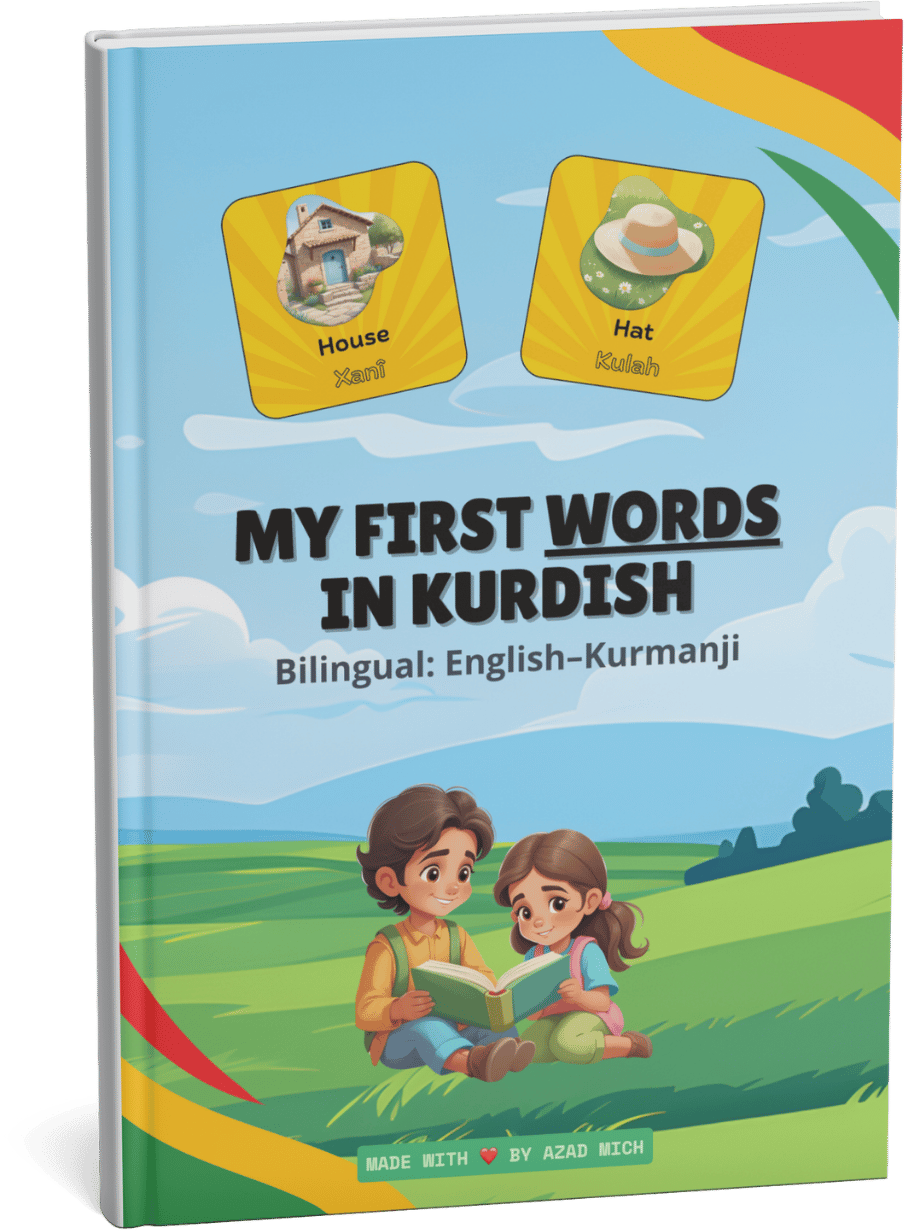
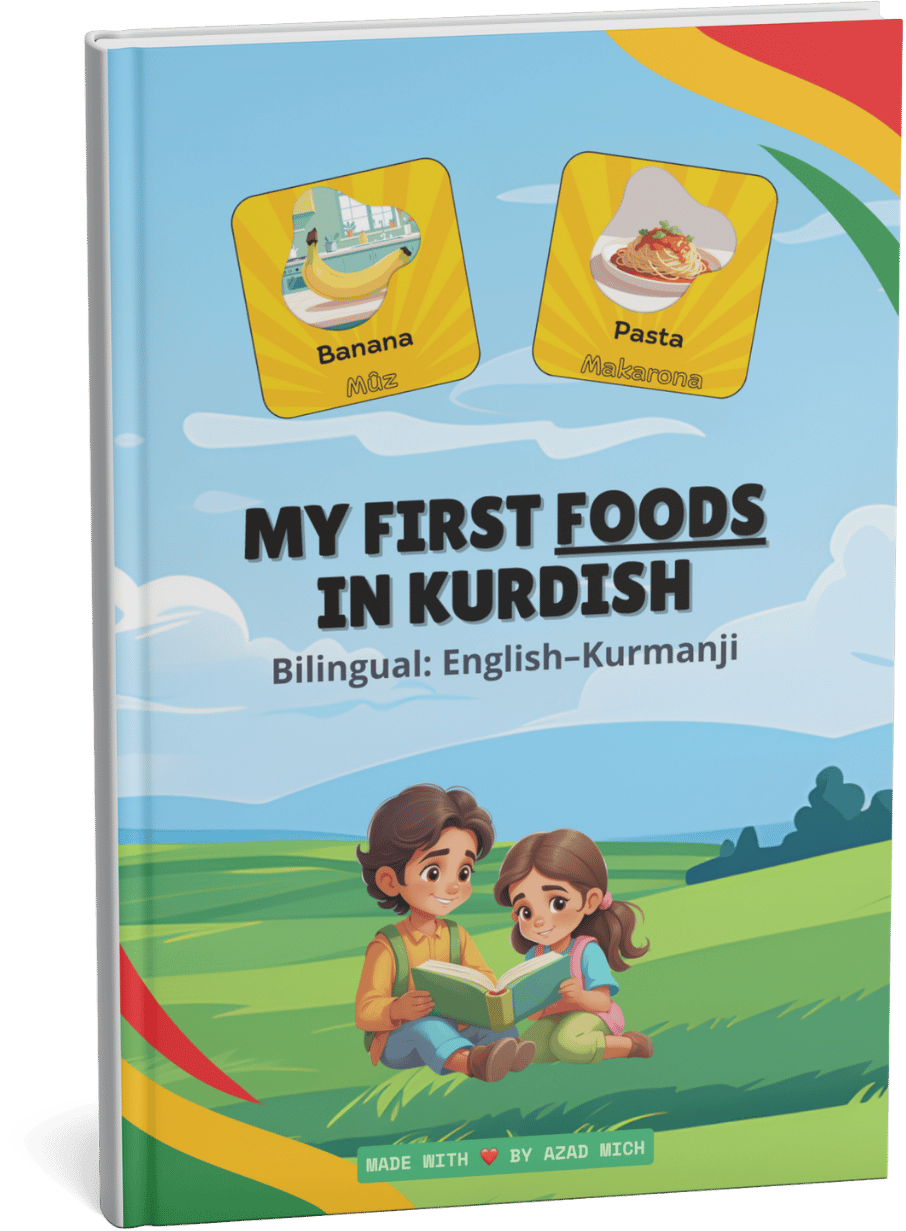
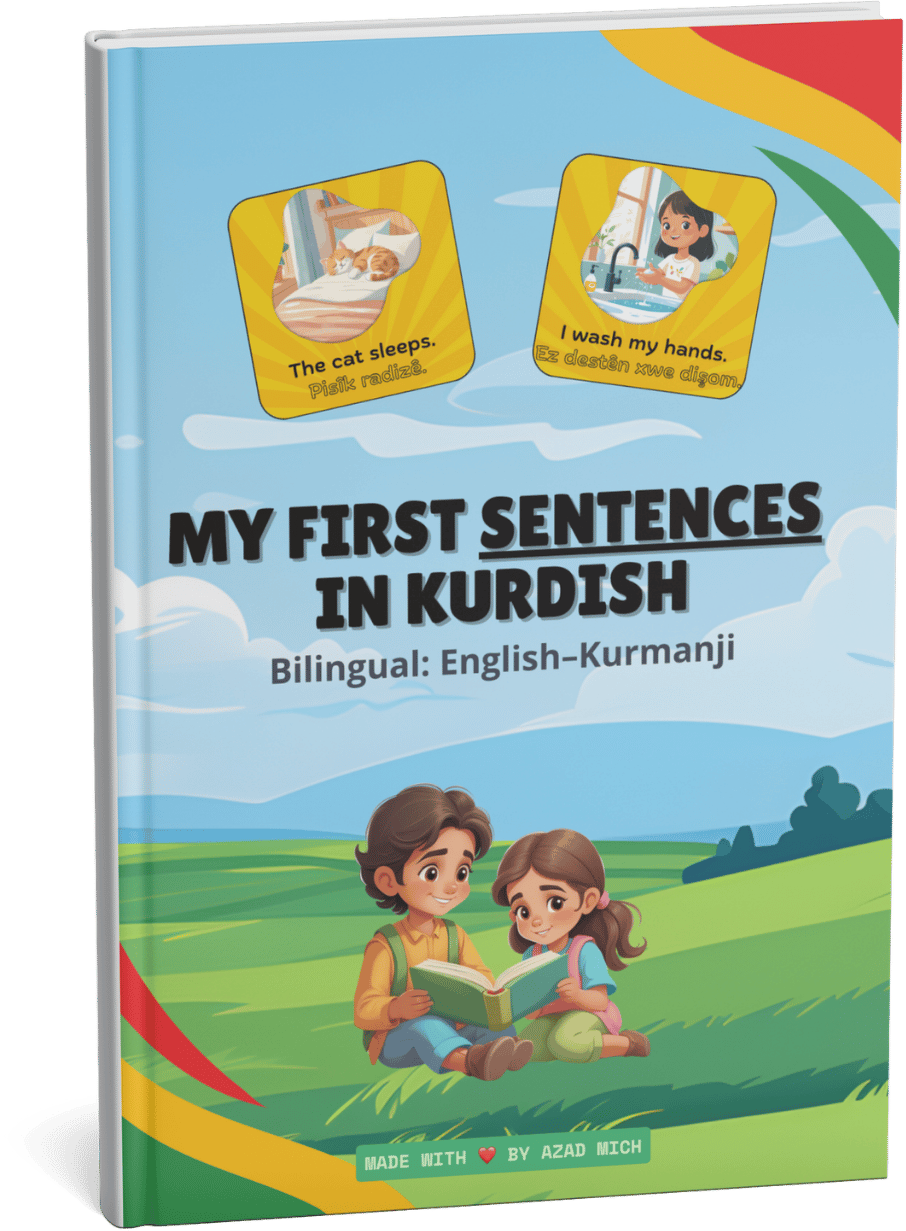
Bilingual books are useful because they remove the hardest part: having to invent teaching moments from scratch. The words, pictures, and themes are already there, ready to be reused.
That is especially important for busy parents who want to keep Kurdish present but do not have the energy for formal lessons.
Choose words your child can use right away
Children remember language more easily when it connects to real life. Start with words about food, family, animals, colours, counting, and things they already care about.
As confidence grows, move into simple phrases and sentences. The goal is not just recognition. It is helping Kurdish feel familiar enough to say out loud.