Why bilingual Kurdish books matter
For many diaspora families, Kurdish is not the dominant language outside the home. Bilingual books help close that gap by placing English and Kurmanji side by side in a format that feels low-pressure and easy to revisit.
The best bilingual Kurdish books for children are not just translations. They are tools for connection: a way to hear family language more often, build confidence gradually, and make heritage learning feel warm rather than formal.
What to look for in an English-Kurmanji book
Look for books built around familiar topics, clear visuals, and age-appropriate vocabulary. Children are more likely to engage when they recognise the objects, actions, or themes on the page.
Simple side-by-side text also matters. It helps families where one parent is more comfortable in English, while still keeping Kurmanji visible and usable in the reading routine.
Good places to start
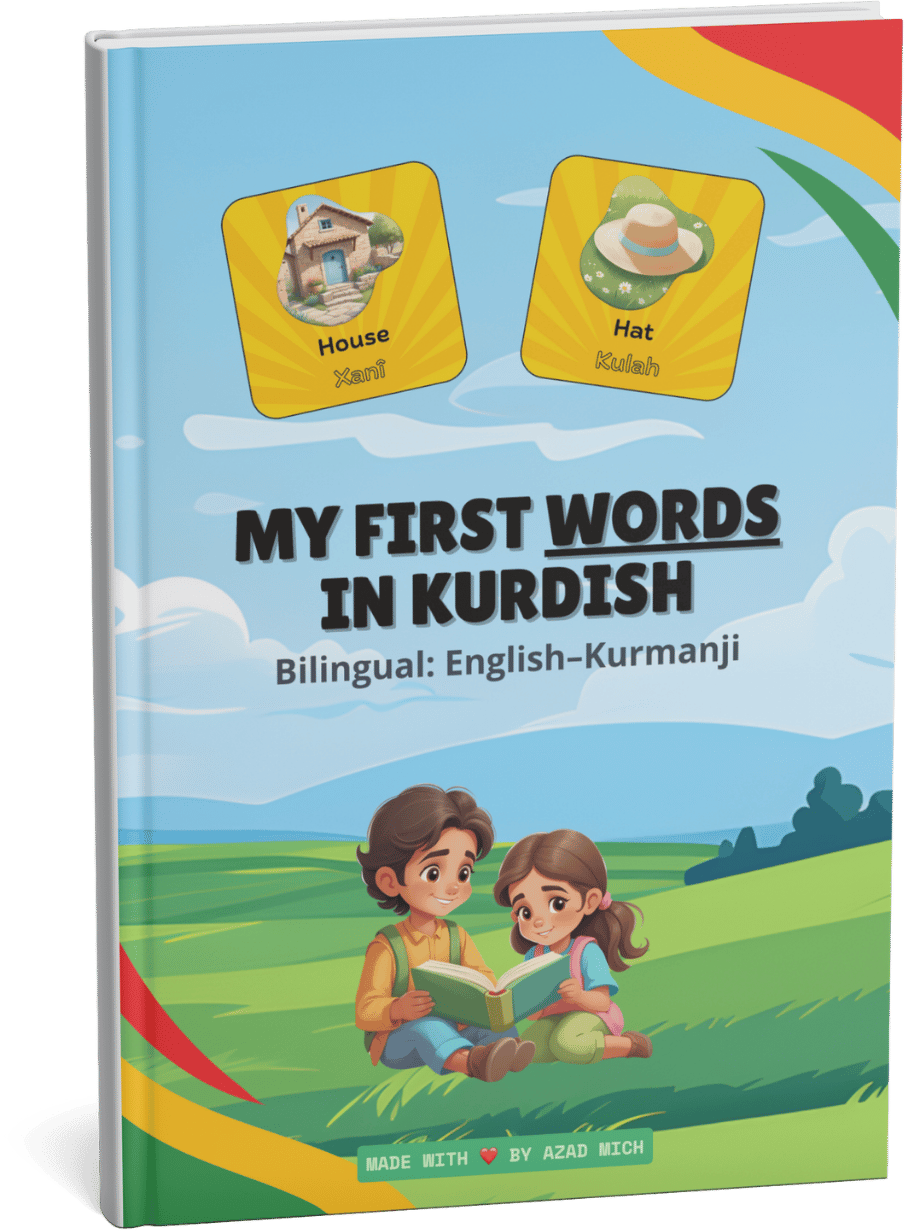
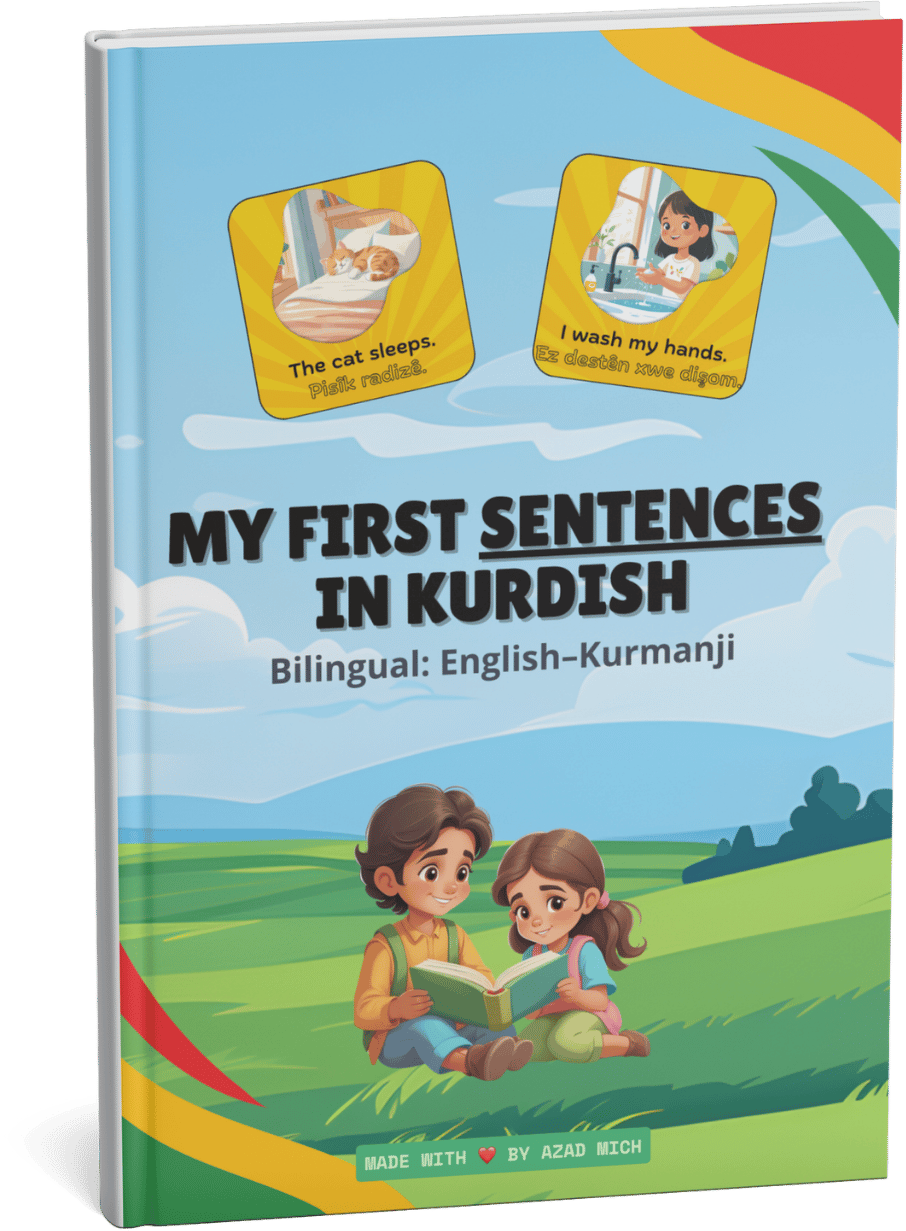
For younger children, first-word and theme-based books are usually the strongest starting point. They create quick wins and make repetition easy. As children grow, sentence-based books can build on that base and help them move toward more confident speech.
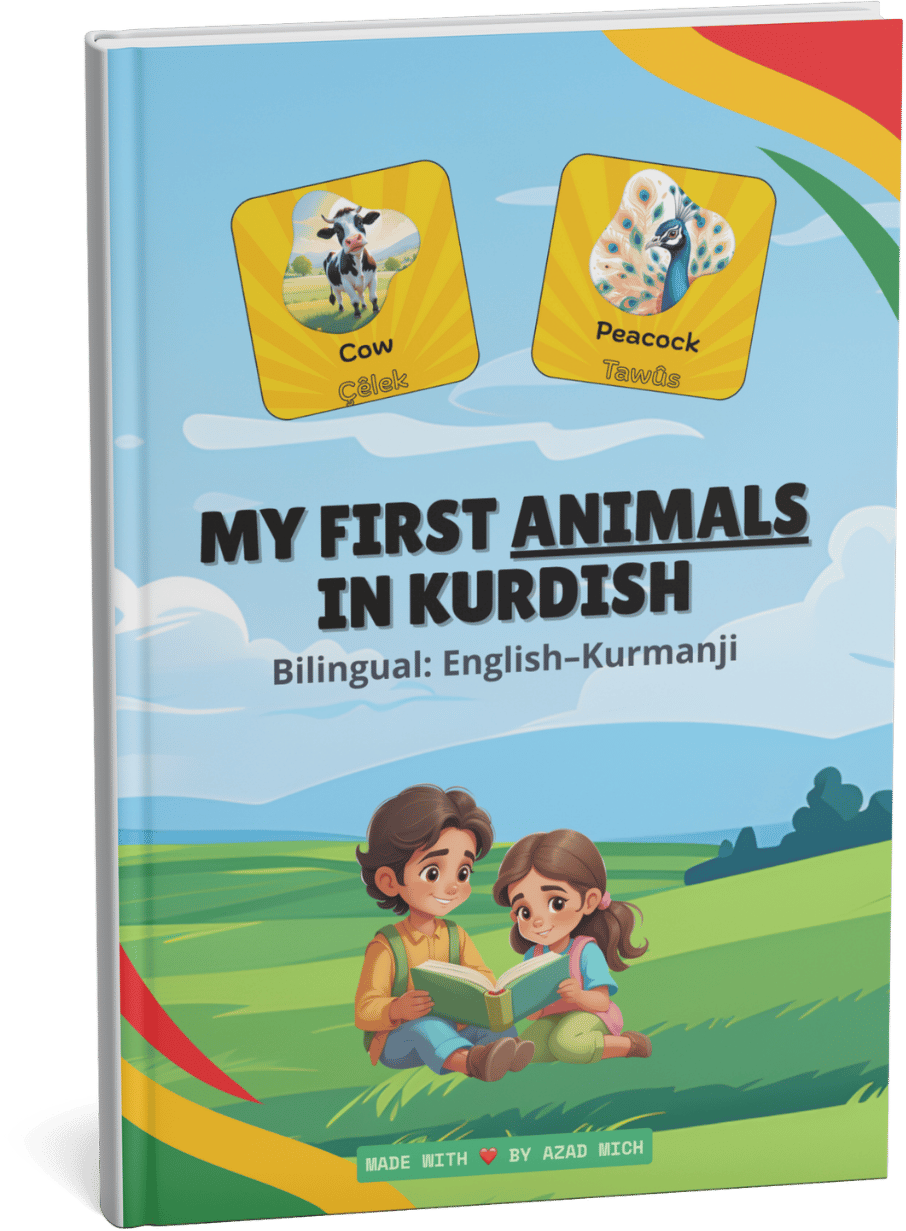
If you are building a small home library, start with one foundational vocabulary book, add a high-interest topic like animals or vehicles, and then layer in books that support longer phrases when your child is ready.